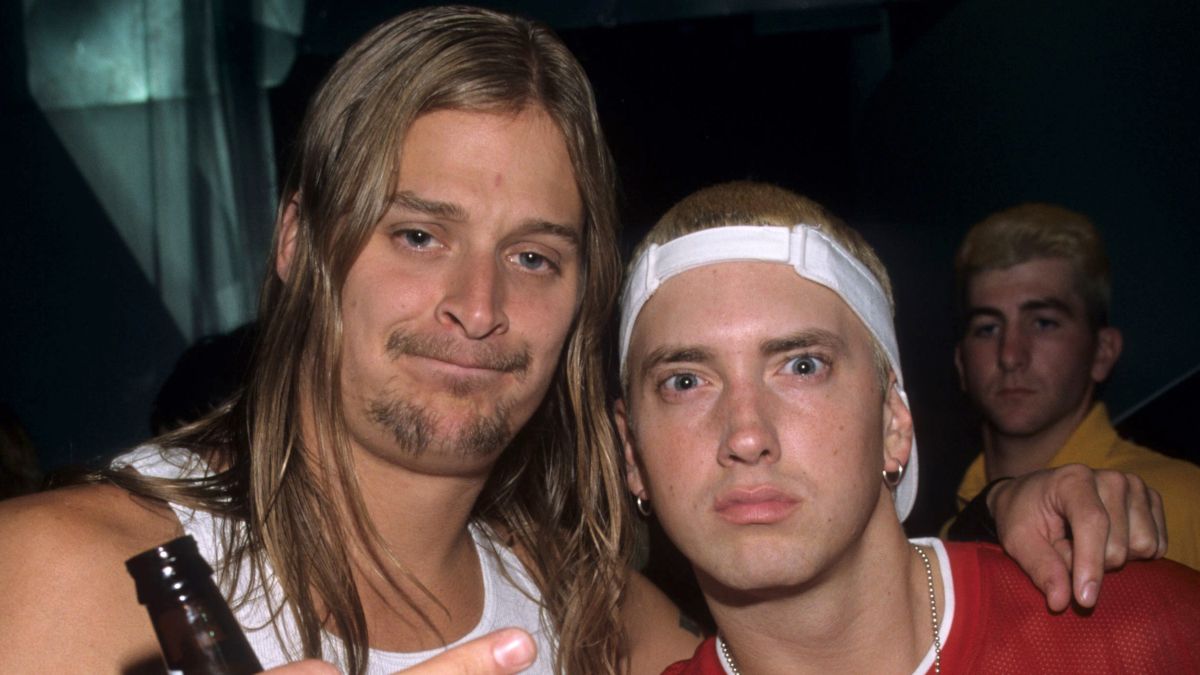
When Kid Rock and Eminem collaborated on "Heal My Faith," the expectation seemed reasonable enough: two major names from Detroit, one pivoting toward Christian music, joining forces to create something meaningful. Yet the song's performance on the charts tells a different story—one about the boundaries of celebrity reach and the specialized nature of religious music markets.
The numbers speak clearly. "Heal My Faith" from Kid Rock's album Halfway 2 Jesus managed only a No. 38 debut on the Hot Christian Songs chart in its first week. It failed entirely to crack any of Billboard's major all-genre song charts. This is not a modest showing; it is a near-invisible one. For artists of this caliber, the absence from the broader Billboard landscape is conspicuous.
More troubling for Kid Rock is the album's own performance. Halfway 2 Jesus failed to crack the Billboard 200 in its debut week—his second consecutive release to miss that chart entirely. While the album did debut at No. 10 on the Top Christian Albums chart, that niche placement underscores a fundamental reality: Kid Rock's audience and the Christian music audience do not overlap as seamlessly as a collaboration between two major figures might suggest.
This failure to chart widely raises important questions about artistic reinvention and audience loyalty. Kid Rock's move toward Christian music represents a significant departure from his established career. The data suggests that fans who followed him through decades of rock, rap-rock, and country fusion are not automatically following him into gospel territory. Conversely, the Christian music audience—which has its own established hierarchies and consumer patterns—did not embrace him as a major new voice, at least not immediately.
What should happen next? Kid Rock and his label should resist the temptation to interpret this as a complete rejection. A No. 10 position on the Top Christian Albums chart indicates real interest within that community. Rather than chasing crossover success with celebrity collaborations, he might focus on building authentic roots within Christian music circles. That requires patience, consistency, and genuine engagement with the values his album claims to represent.
The larger lesson here is that fame in one market does not automatically transfer to another. "Heal My Faith" and Halfway 2 Jesus may yet find their audience, but it will likely be built slowly and deliberately, not through star power alone. Sometimes the hardest journey isn't between genres—it's between fanbases.