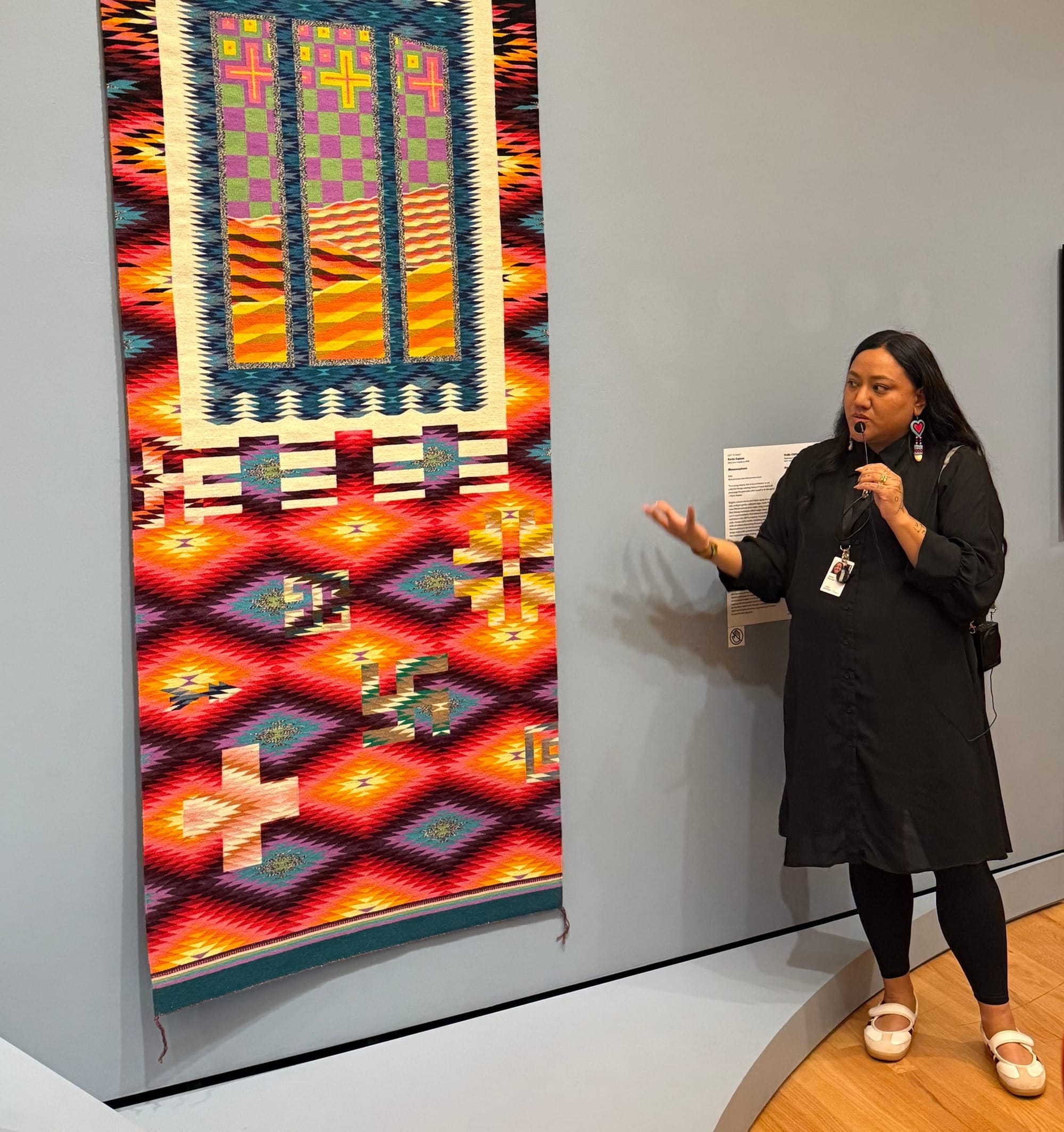
Jordan Poorman Cocker, a Kiowa and Tongan citizen hired as Crystal Bridges Museum of American Art's first full-time curator of Indigenous art in 2023, arrived at the Bentonville, Arkansas institution with an ambitious vision. On October 16 and 17, she convened Indigenous artists, curators, and scholars for a symposium on contemporary Native art—a gathering that coincided with a major reinstallation of Indigenous work she spearheaded alongside Ashley Holland of the Cherokee Nation. The symbolic weight of this moment cannot be overstated: the museum, founded by Walmart heiress Alice Walton and situated on the ancestral homelands of the Osage Nation, Quapaw Nation, and Caddo Nation, was finally centering the very peoples whose lands were stolen.
Poorman Cocker's curatorial practice, informed by her museum studies background at Victoria University of Wellington in New Zealand and a global understanding of Indigeneity that rejects colonial borders, represents something genuinely refreshing. The symposium featured Choctaw and Cherokee artist Jeffrey Gibson delivering a keynote address while beading with Poorman Cocker, Diné weaver Melissa Cody in dialogue with her mother Lola Cody, and traditional kapa practitioner Lehuauakea leading a workshop. These were not token gestures; they were deliberate attempts to showcase living Native artists across Indian Country and honor intergenerational knowledge systems.
Yet Poorman Cocker's own words reveal the sobering reality of this undertaking. Indigenous and Native art comprises only about 3% of Crystal Bridges's permanent collection. This statistic alone indicts not just this institution but the entire museum sector, which has chronically sidelined Native artists despite their foundational importance to American art. The 114,000-square-foot expansion theoretically provides capacity for change, but capacity without sustained commitment is merely architecture.
The real test lies in whether Crystal Bridges will follow through with what Poorman Cocker envisions: using its resources to 'nourish the art ecosystem' through artist commissions, apprenticeships, community classes, and education efforts. The reinstallation, however well-intentioned, is a beginning, not a conclusion. Museums built on stolen land must do more than acknowledge that theft; they must materially reorient their collections and budgets toward repair.
Poorman Cocker's presence as a full-time Indigenous curator is groundbreaking. But one curator cannot single-handedly decolonize an institution. The question now is whether Alice Walton's museum will demonstrate that good intentions, backed by Walmart wealth, can actually transform how American institutions tell the stories of Native peoples—or whether this will become another well-appointed performance of diversity while fundamental inequities persist.