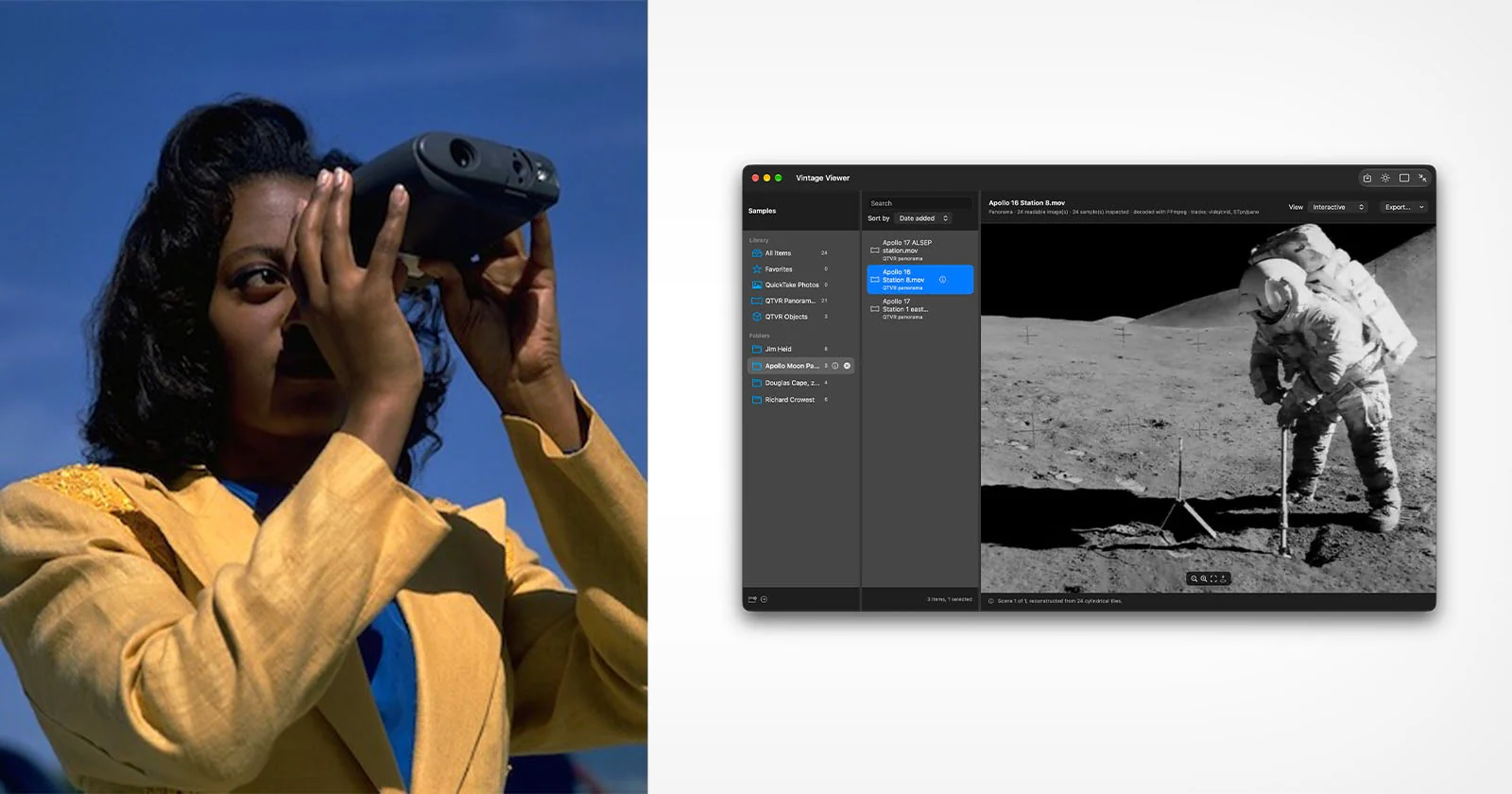
When Steve Jobs returned to Apple in 1997, he wielded a hatchet. He cut 70 percent of the product line down to four cornerstones: iMac, iBook, PowerBook, and Power Mac. This ruthless pruning made business sense at the time, but it came at a cultural cost. QuickTake cameras, which had launched the digital photography revolution with Apple's 1994 QuickTake 100, didn't fit the new vision. By the end of 1997, Apple had discontinued its entire camera line. The company had also shuttered the Advanced Technology Group—the very team that created QuickTime VR in 1995—just one month before shipping QuickTime VR Authoring Studio in November 1997.
QuickTime VR was genuinely innovative, a technology without analog in the analog world. It enabled photographers to produce 360-degree panoramas that viewers could navigate with a mouse and keyboard. As an Apple tech note from the era called it, this was 'virtual reality for the rest of us.' Content creators embraced it enthusiastically. Publishers produced virtual travel experiences to other countries and lost Mayan cities. Museums and universities created virtual exhibits of the pyramids of Giza. NBC News published crime scene panoramas during the O.J. Simpson trial. Architects and real estate agents created walkthroughs. It was genuinely the promise of the web, where diverse voices could share their perspective without being drowned out by algorithms.
Yet Apple abandoned both formats without hesitation. Photos taken with QuickTake 100 and 150 ended up in the file-format dustbin when Mac OS X couldn't open them. When Classic, the compatibility layer, went away in 2007, thousands—maybe millions—of photos became unreadable on anything other than an older computer. QuickTime VR suffered the same fate. Apple never developed an OS X version of Authoring Studio. When Classic disappeared, producers had to either maintain ancient hardware or switch to third-party tools. By 2019's macOS Catalina, which abandoned 32-bit support, attempting to open a QuickTime VR movie earned only an error message.
Apple didn't have to let these formats die. The company could have continued supporting the QuickTake photo format. It could have adapted QuickTime VR Authoring Studio to run in Mac OS X and to export web panoramas that didn't require browser plug-ins. But business is business. Maintaining software isn't free, and when the potential market is small, spreadsheets are consulted and products vanish.
Yet that calculus doesn't account for memory itself. Many thousands of QuickTime VR movies survive on old websites and the Internet Archive, but they cannot be viewed with modern browsers or Apple's current QuickTime Player. The photographs and panoramas captured by ordinary people across decades have become inaccessible artifacts. It's time for Apple—or the open-source community—to bring these formats back, not for nostalgia, but because preserving how we documented our world matters.